The monasteries of Halki are more than places of worship; they are living monuments to the island’s soul. Nestled in remote hills and fertile valleys, each offers a unique blend of breathtaking views, profound history, and heartfelt local tradition, inviting visitors on a journey of discovery.
The island of Halki, a tranquil gem of the Dodecanese, is home to three truly remarkable religious sites that together weave a rich tapestry of faith, history, and local culture. Each location offers a unique and deeply positive experience, encouraging visitors to explore beyond the main harbour and discover the island’s spiritual heart. These are not just ancient buildings; they are vibrant, living monuments where tradition is celebrated with warmth and generosity, making a visit an unforgettable part of your Halki adventure.
Begin your exploration with the Monastery of Agios Ioannis Alargas, also known as the “Far Monastery.” This is arguably the most significant pilgrimage site on the entire island. Tucked away in a fertile valley on the western side of Halki, near the mountain of Amali at an altitude of 386 metres, it is located approximately 7.5 kilometres from Nimborio, the main settlement. What makes this monastery so special is its profound connection to the island’s sponge fishermen. Legend tells that these daring divers considered John the Baptist their saviour and protector during their perilous descents into the deep sea. The monastery, dedicated to the Beheading of John the Baptist and celebrating on August 29th, was built during the 19th century, though icons dating back to 1835 suggest an even older origin. Inside the main church, you can see exquisite icons donated by local sponge fishing families, including the names of the first machine-diving pioneers of Halki. The location itself offers a wonderful panoramic view of the surrounding mountains and sea. But the true magic happens during its famous festival. On the eve of the celebration, the monastery lovingly offers pilgrims roast lamb from its own flocks, baked with potatoes or pasta, along with various appetizers. The next day, a breakfast of honey and a Lenten meal are served, embodying the island’s legendary hospitality. Another grand festival for the Virgin Mary (Panagia Eniameritissa) takes place here on August 23rd.
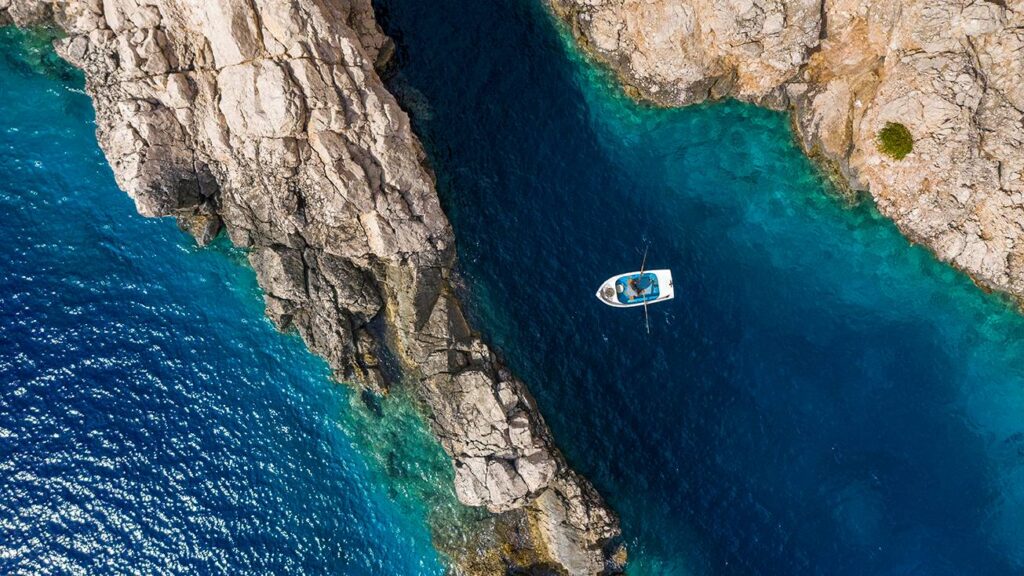
Next, make your way to the Monastery of Taxiarchis Michail Panormitis, perched on the hill of Agios Onoufrios. This monastery is an absolute treasure for art and history lovers. Its most stunning feature is the double-vaulted roof adorned with incredible Byzantine murals. Here, you can witness layers of history directly on the walls—the first layer of frescoes dates back to the 13th century, while a second layer was added in the 14th century. These works of art are remarkably well-preserved and are, without doubt, a major reason to visit. As you walk through the courtyard, look down at your feet. You will find a beautiful pebble mosaic featuring intricate geometric shapes, a fantastic example of traditional Dodecanese art. The peaceful atmosphere, combined with the spiritual weight of centuries, makes this a place for quiet reflection. From its elevated position, the monastery rewards your visit with a breathtaking panoramic view that stretches out over the endless blue of the Aegean Sea, a vista that alone is worth the journey.
Finally, no spiritual tour of Halki would be complete without visiting the church of Panagia Choriana, located in the old, abandoned settlement known as Palio Chorio, about 2 kilometres from Emporio. This church is a poignant testament to the island’s prosperous past. As you walk through the quiet, restored ruins of the old village, the church stands as a beautiful and resilient survivor. Its interior is adorned with significant ecclesiastical heirlooms, portable icons, and stunning frescoes that bear witness to the village’s population and artistic peak in the 18th century. The most joyous time to visit is on August 15th, the Feast of the Dormition of the Virgin Mary. This is Halki’s most beloved festival, and its ritual has remained unchanged through the ages. Two or three days before, the island’s residents come together to clean the church. On the eve of the celebration, they make their traditional walk to Palio Chorio. There, the feast begins with joyous songs accompanied by the hauntingly beautiful melodies of the Cretan lyre, creating an atmosphere filled with nostalgia, community, and celebration. Visiting Panagia Choriana is not just seeing an old church; it is connecting directly with the living heart and cherished memories of the people of Halki.