

Tucked away in a wild, rocky bay, Areta Beach is a secluded pebble cove with mesmerizing turquoise waters. Accessible only by boat or a challenging hike, it offers pure tranquility away from the modern world.
On the northern coast of the small, timeless island of Halki, far from the gentle chatter of the harbor and the soft lapping of water against fishing boats, lies a place that feels not just remote, but mythic. This is Areta Beach, a small, pristine cove of smooth pebbles lapped by some of the most astonishing turquoise and blue-green waters in the entire Dodecanese. Unlike the organized beaches near the main town of Emborio, Areta has surrendered none of its wild character to loungers or cafes. There are no amenities here—no umbrellas, no bars, no lifeguards. There is only the sea, the sun, and the profound silence broken only by the gentle turn of a wave over stone.
What makes Areta truly extraordinary, however, is not merely its beauty, but its dramatic and almost intimidating setting. The beach is nestled inside a very small bay that is enclosed by monolithic, sheer cliffs that rise vertically from the shoreline to heights of up to 400 meters. These high rocks are the beach’s only guardians, offering fleeting patches of natural shade as the sun arcs across the sky. The seabed here is excellent, sloping gently into deep, crystal-clear water that is ideal for snorkeling, revealing a hidden world of rocky crevices and marine life.
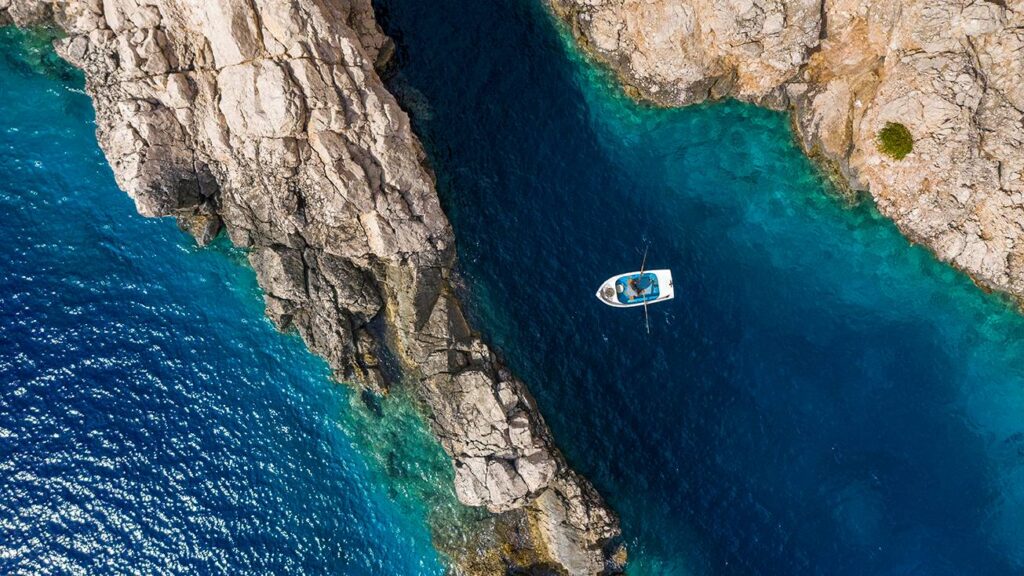
But Areta’s magic is steeped in legend. According to local lore, this isolated bay is none other than the mythical Bay of the Cyclops, directly linked to Homer’s Odyssey. High on the rocky slope that surrounds the cove, there is a large cave. Tradition whispers that this was once the home of the fearsome one-eyed giant Polyphemus. Around the cave, wild goats and sheep still roam freely, just as they did in the time of Odysseus. It was here, the story goes, that Polyphemus devoured several of Odysseus’s companions, trapped in the giant’s lair. And it was here that the cunning king of Ithaca got the giant drunk, plunged a sharpened stake into his single eye, and escaped by clinging to the belly of a ram. Just a few meters off the coast, a lone rock breaks the surface of the sea—a rock that, according to the myth, is the very boulder that the blind and furious Polyphemus hurled at the sound of “Nobody’s” escaping boat.
Reaching Areta Beach is a journey worthy of an epic hero. The easiest way is by private boat, gliding into the small bay where the water turns from deep blue to radiant aquamarine. For the adventurous, there is a beautiful but demanding hiking trail that begins in the main town of Chora (Niborio). This 8.2-kilometer (approximately 3 hours and 15 minutes) trek is a spectacular journey across the island’s rugged interior, but it is not for the unprepared. The final descent to the shore is steep and rocky, demanding good physical condition and proper footwear such as hiking boots or sturdy sneakers—flip-flops are a dangerous folly. Avoid this hike during the scorching midday heat, and always carry ample water and snacks. Yet, for those who make the effort, Areta Beach rewards the traveler with something increasingly rare in the Greek islands: a true escape. It is a place for peace, for relaxation, and for swimming in waters so clear they feel like a dream, in the shadow of a legend that has survived for three thousand years.